Wickedly Delicious b1 chapter 4

 <<<<                                                          >>>>

Chapter 4

In addition to the novel this book has a coloring pages in the back for the ultimate cozy experiance. Find it on Amazon

It was far colder the next morning. The rain was still coming down in large (but slow) droplets that smacked into the muddy ground. Had my boots not been enchanted to keep from sticking, they would have been nearly impossible to slog through that thick mud. 

I’d enchanted the pink umbrella to stay above me on its own, freeing my chilly hands to hide in my pockets, with the basket tucked into the crook of my arm. Noreen had opted to ride inside a giant pocket on the front of my robes, like a baby kangaroo. I couldn’t really blame her; if I’d had the option to curl up out of the damp, I also would have done so. The cold sucked the energy right out of me, and after last night, I was tired to begin with. I let out a loud yawn. 

“After a party like last night’s, the world seems a bit drab,” Noreen said. “Back when the Saxons still ruled Wiltshire, we celebrated every single night.”

“Sounds exhausting,” I said. “Don’t get me wrong, I had a good time, but it seems like it would get monotonous after a while.” 

“Fairies don’t get bored of repetition like humans do. It comes from naturally living thousands of years,” Noreen said.

“One party was enough for me to need a midday nap to recover,” I said, “so I think I’m good on that front.” 

Larkin was waiting under the tree with a forked trunk at the edge of the pixie’s moorlands. I must admit I was somewhat disappointed that he’d beaten me here. I had planned to tease him about not finding a giant forked trunk tree, but now he had the upper hand— just my luck.

“Lord Larkin!” Noreen squeaked.

“Good morning, Lady Noreen. I trust you are well today.”

“Just Noreen, let’s not tie our tongues up with all those titles when we’re not in public,” Noreen said. 

“Ready to meet the locals?” I asked, trusting that the greetings were complete.

“If Noreen is ready, then I am,” Larkin said with a wink.

“I’m always ready,” Noreen said in her normal voice this time. “This way.” 

 She trotted along the path into her home territory, much surer of herself here than in Fareesee territory. Larkin motioned for me to go ahead, and we did a little dance of indecision for a moment until I gave in and let Larkin come last. Usually, a guest in Pixieland would go in between his guides, but Larkin was an errant and could supposedly look out for himself. 

“Who would sneak up behind an errant? Perhaps a suspicious Badger Pixie, a fox, or a grumpy bear…” Larken trailed off.

“Um, Larkin, you might want to watch your back. You aren’t known in Wiltshire, and you know the Fey, they can be a bit suspicious of new people. I wouldn’t want someone to sneak up and befuddle your mind, or worse, put a hex on you,” I said.

Larkin nodded seriously, his eyes alert. I felt a little foolish for having said anything. It wasn’t like when I’d shown my little sister and brother around.  He was a trained Errant who’d gone after the largest troll in England’s history, after all. He didn’t need my advice.

But when he spoke, it wasn’t to tease me. “Thanks for the advice. It’s easy to forget there are dangers in such an idyllic countryside.”

I smiled at him and felt a bit better. He had gotten much nicer as he aged. In school, he would have dressed me downright quick for a statement like that. It was one of his faults. If he felt criticized, he could have a hot temper. While he may still have it, he wasn’t using it on me today.

Our first stop was at the den of a pixie, who had appeared today as a rabbit, perhaps as part of an irony, given how many children she had poking their noses out into the rain from the den. She shooed them back into her home and turned to me.

“I don’t have payment today, Winifred,” she said. “Rooster didn’t come home last night, and he was bringing me the herbs.” Tears filled her eyes.

“This wouldn’t be the first time Rooster went astray, Arrie. Don’t worry, he’ll be back. And you can pay me when you’re able.” 

I sorted through the packages and handed her the one with her name.

She touched my arm and smiled through her tears. “Thank you,” she said.

“Arrie, I want to introduce you to our newest Knight Errant,” I said. “Knight Larkin, this is Arrie.”

Larkin stepped forward and offered Arrie a bow of the head, which Arrie returned.

“Knight Larkin,” she said, “I’m happy to know you. Reeve Humphry has had his work cut out for him, so I’m hopeful you’ll be an asset to him and to our safety, especially now with Spriggans out and about.”

“Spriggans?” Larkin asked.

“Mrs. B.’s cats have been acting up. They’re pretty sure it’s something like that,” she said. Apparently, Mrs. B. had been spreading her suspicions everywhere. “Normally I wouldn’t put much stock in what she or her cats have to say, but that Ettin Wymond is clearly increasing his guard. It’s like he’s raising an army, so he knows something is up as well, I’m sure. But you seem the type who can keep us safe.”

“Thank you, Ms. Arrie. And I hope you will feel free to call on me if you ever need help with anything,” Larkin replied.

“Thank you, Sir Larkin,” Arrie dropped into a half curtsy.

Larkin laughed. “It’s just Larkin, and there is no need to curtsy to me,” he said. “I’m just a plain wizard, no higher on the social rank than you.”

I didn’t believe this was strictly true. Just becoming a Knight Errant raised your social status, and I’m pretty sure that something he’d done impressed my grandfather, such as the troll he defeated, which probably got him a Lordship of some sort. Certainly that would justify a “Sir” in front of his name if he chose. 

But that wasn’t Larkin. He didn’t feel the need to elevate himself above others and scoffed at those who did, which made me wonder how he really felt about Reeve Humphry.

We left Arrie and made our way along my route. I introduced Larkin to a Pixie who preferred to take the form of a Toad, Badger, and Otter before making our way to see Mrs. Bakelsdale and her many cats. She rubbed her hands in glee when I introduced Larkin.

“The new Knight Errant! How fortunate am I to meet you on your first day out and about!”

“The fortune is all mine,” Larkin said with a charming bow and a kiss of the hand.

Mrs. B. beamed at him. “You seem dashing for a knight. I bet you can grow a hundred feet, like King Arthur. It’s an image that warms my heart to imagine! Can you?”

Larkin glanced at the low ceiling. He was already crouched to fit in Mrs. B.’s living room as it was, a fact that he mentioned.

“Just a little. With the Spriggans around, it’ll be nice to know that we have a knight who can match their size.”

 Larkin looked at me and I nodded. Mrs. B. would talk a lot about him the moment we were gone, so we might as well ensure that what she said was positive. 

He sat down and started to grow, doubling in size before he stopped. Mrs. B. clapped her hands together. 

“So lovely. It’s nice to have another dashing knight in our region, and even better that you are friends with our Lady Gaveston.”

I suppressed an eyeroll and handed Mrs. B.’s umbrella back to her.

“Thank you for the use of your umbrella,” I said, rummaging in my basket for her scones. “It came in very handy, although I almost hit Sir Humphry with it when he startled me. That would have been the wrong thing to do, times ten. Luckily, I suppressed my instincts just in time.”

Mrs. B. cackled loudly. You’d think I had just told her the funniest thing ever, which it was not.

“Would have served him right if you had beaned him,” she said. “He has no business sneaking up on law-abiding folk that way. I would have gladly sacrificed my umbrella to the cause.”

“He’s worried I might have taken after my grandfather,” I said. “So, he keeps a closer eye on me than most.”

“Your grandfather is a wily old coot, but he’s rescued many families from hard times. Reeve Humphry may be picking on you because he doesn’t dare harass your grandfather as much as he used to. Lots of folks around here would be angry with Humphry if he pulled in Sir Elric for too long. He might not be able to quell the uprising.”

I cocked an eyebrow. I’d known my grandfather was well liked in some circles, especially among the Fareesee, but I hadn’t heard anyone mention that an uprising could be sparked if he were arrested. 

She turned and narrowed her eyes at Larkin. “See you don’t go looking too deeply into Winifred’s family, young man. Many of us are beholden not only to her father but to her mother’s clan, and there is far more at stake than a few taxes and illegal goods smuggled.”

“No need to worry, Mrs. Bakelsdale,” he said. “I have bigger fish to fry. And Winifred is one of my closest friends, her family is safe from me.”

“Call me Mrs. B.,” Mrs. Bakelsdale said. “Everyone does. And I heard that you spent the entire ball with Winifred. Some people wondered if it was wise of you to spend so much time with one person in a new community.” 

Her eyes crinkled at the corners, and I could tell she was trying to suppress a laugh.

“Winifred was introducing me to the guests,” Larkin said, smiling back at Mrs. B. “It made sense to stick to a friend who knew all the people in the room.”

“And if she’s an attractive young thing, all the better, eh?” Mrs. B. did laugh this time, slapping her thigh and taking in big gulps of air. “There’s no point trying to hide it, Errant Larkin. You won’t be able to keep any secrets on Hackpen Hill.”

We said our goodbyes to Mrs. B. and came to the mundane road on our own. There was a police car parked on the edge of the road blocking the path, so we made our way around it warily. We stepped lightly as we made our way down the track, but it was evident that we weren’t going to easily avoid the pair of police who were blocking our path.

I could have pulled out my spear and flown both Larkin and myself over the place where they were swarming. We probably could have kept up the spell to stay unnoticed long enough, and maybe that would have been more prudent, but alarm bells were sounding in my head, and I wanted to see what had brought them here in the first place.

“I want to see what’s going on,” I whispered to Larkin as I lowered my basket for Noreen to climb in.

He didn’t speak but nodded once in agreement, and we walked around the bend in the path as unobtrusively as we could. I wanted to get as close as possible before they noticed us, but making us invisible and then popping up in their midst was not advisable. 

Not many people realized they coexisted with the Fey, and we wanted to keep it that way. “No big surprises” was a big part of that. I needed to be as unremarkable as humanly possible, and as “witchly” possible, to borrow the phrase.

“Heart attack, fell and hit his head on a rock,” pronounced one of the officers, a woman in her early thirties.

“I don’t see any signs of foul play,” said the other, “but there will need to be an autopsy. Let’s get him tagged and bagged once the coroner arrives.”

One of the policemen moved, allowing me to see what was on the ground. I gasped, my mouth making a startled “O” shape when I saw him. 

Reeve Humphry was laying in the mud, staring up at the falling rain. I’d never come across a dead body before. I felt strangely numb, like the effects of a spell that a medical witch casts on your mouth before they do dental work.

Without thinking, I jumped forward to try to help call Reeve’s spirit back to his body. My grandmother had told me that dead didn’t always mean “dead.” There were spells, not well-known, that could pull a person’s spirit back to their body if it still lingered. 

Larkin put his hand gently on my shoulder. “He’s gone, Winifred. His spirit has already moved on.”

I looked back at Humphry. Errants could talk to ghosts and sense them; it was one of the best ways to solve crimes. If he said the ghost was gone, then it clearly was. I shuddered. My stomach felt raw, like it had been punched. I never would have imagined I’d have such a visceral reaction to seeing the ol’ Reeve dead like this. 

“They’re contaminating the scene,” I said in disbelief, watching the pair of officers strolling about, doing their best to look for clues. 

What they didn’t know was that this was likely a magical attack, something they’d never be able to comprehend. Their own auras could mix with any residual magic that had been left behind. 

Larkin let me go and frowned. This investigation was to be conducted by deputies, and with the head reeve now dead, Larkin would be in charge of them, at least temporarily. Only they would understand how to trace magic well enough to get any information from the crime scene.

“We’re going to need to lead them away, to a changeling,” he said.

“Noreen, do you think you could lead them away?” I asked.

The Pixie nodded. Befuddling people’s minds was what Pixies were best at. Thanks to Pixie shenanigans, many who thought they’d just been puttering around their kitchen had found themselves in deep forests, or those who were exploring the deep woods had found themselves wandering a circle in their garden. 

Noreen pranced into the bushes near the pair of police, who stood talking and apparently certain this had to be a heart attack. A wispy light appeared above Noreen. The policemen’s faces went blank for a moment, letting me know that Noreen had ensnared their minds. They wandered away from Humphry’s body and down the road, following Noreen and the wispy light she’d created. As far as they knew, they were still combing the area around the body. 

“I think the margot would help with the changeling,” I said. Wizards might have far flashier spells, like the one allowing them to grow into giants or summon each other, but witches received magical aid from fairies. In that sense, we were like Pokemon masters of the magical world. 

I called on the margot with a spell song, and she whispered back to me from the thicket of trees. She still wasn’t willing to show herself. 

“I need a changeling of Sir Humphry,” I told her. “Noreen is leading the mundane police down that way,” I pointed with my chin. “They know there’s a body, so we need to have them bring a decoy back to their base. One that looks like it had a heart attack.”

The margot whispered that it would be taken care of and I gave a small sigh of relief. I shuddered once more at the sight of Humphry’s body just feet from where I was standing. 

Larkin pulled out his passé broom and hovered a few feet off the ground to examine the scene. He flew around the body slowly, attempting to detect any out-of-place magic or residual energy left by others. 

Unfortunately, the mundane police officers had trampled areas that should have been left untouched. Larkin could have read the energy signs of the murderer, but they were likely obscured now with all the other footprints.

Larkin flew up, away from Humphry. “I’m going to summon the deputies now,” he said. He cupped his hands, muttered a spell, and an orb of light appeared between them. Then he spoke loudly, “Disseminate!” 

He opened his hands, and light scattered to all the points of the compass, like shooting stars. The ability to summon others to their side was exactly why wizards made the best Errants and Reeves. 

“You were always a showoff,” I said. “Such dramatic spell work.”

He grinned. “You know what they say if you’ve got it…” 

Suddenly, his face fell. “Seriously, Winifred, you should go. The other deputies will suspect you on instinct.”

“You’re going to need my help questioning the Fey in the area. This event will send them into a panic. You’ll be lucky if any of them stay close by, but they certainly won’t open their doors for just anyone.”

He frowned. “The deputies will be here any minute now.”

My heart did a frog hop. The deputies who’d always been so cold to me were going to be furious and in deep despair when they found out what happened. That anger would indeed likely land heavily on me, fair or not. 

  “You’ll find me at Mrs. B’s,” I told him in a whisper. “After I get Noreen.”

“Careful what you say in front of her. I’d like to keep a tight lid on this news if I can,” he remarked.

“If there are any witnesses, we’d know soon. Her gossip circles might be a good place to start,” I said.

Reluctantly, he nodded. We clasped hands briefly before I turned and made my way towards Noreen. With any luck, I’d soon catch up with her. My head was spinning, and I needed someone to talk to.

I had both my wand and sword out at the ready as I walked. You never knew who could be listening out in the world. 

Pixies and Fareesee were very good at hiding, and some could even make themselves invisible. I once walked right into a bogle who was practicing her stalking skills, following me through the forest. When I realized I’d forgotten to give one of my clients their order, I turned quickly and ended up flat on my back while the bogle laughed hysterically. My only consolation was that she’d been unable to maintain her invisibility and had been knocked flat on her back as well. They couldn’t hurt anyone while invisible, though; the best they could do was get bumped into. 

 <<<<                                                          >>>>

In addition to the novel this book has a coloring pages in the back for the ultimate cozy experiance. Find it on Amazon


Quilt Charms

 My goal is to create whimsical, fun, and unique charms for quilters and upcycling. 

My charms are 100% cotton and are all made in short runs. 


Longing to Wander Through Space


Wanderers - a short film by Erik Wernquist from Erik Wernquist on Vimeo. Read more:

One of the most stunning videos I've seen, one which makes me ever more anxious to get out, to explore and discover. There is only one impediment to out exploring other worlds, and that is desire. There are many less productive things that stimulate the economy, from ultra expensive food to multi million dollar paintings. What allows these industries to thrive is desire.

If the desire existed we could spend hundreds of billions of dollars to collect explorer journals and photographs of our Solar system, rocks from other planets as jewelry. The problem is people desire other things....

But this is turning as more and more super rich found companies such as Space X, Virgin Galatctic, and Planetary Resources.

Further falling prices, and ever greater wealth will allow us to eventually push out further. In the mean time, perhaps the most important thing to do is to keep increasing our desire for a wonder filled future.


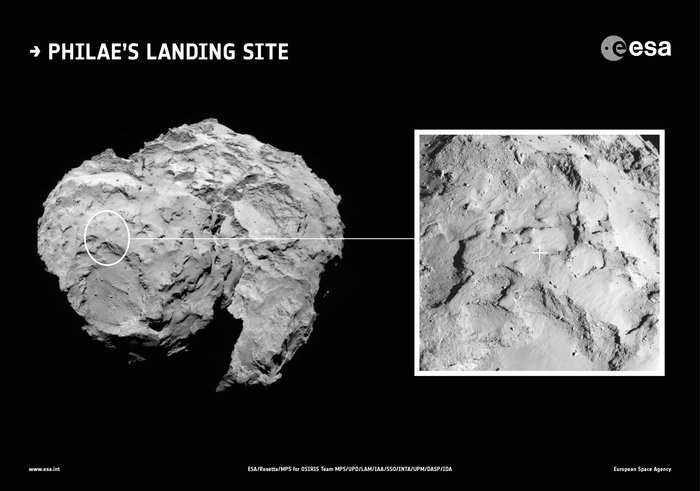
Holy Shnookerdookies! We landed on a Comet!

With harpoons shooting out of it, and it's feet drilling to the ice, ESA's Philae space robot grabbed hold of the icy comet it was landing on for dear life. This marks the first time in history that we've ever landed on anything so tiny, and it marks an astounding success after a 10 year journey across our Solar System, and many years prior to that of planning and building the space probe that would make history.


This is an amazing feat, that could bring us closer to Planetary Resources dream of mining space. Philae's actual mission, however, is just as impressive. It will, give us an "unprecedented scientific analysis of the comet, a remnant of the Solar System’s 4.6 billion-year history."

We are sort of drifting in this little Solar System of ours, so it's important to know where it came from and where its going.

But since this is in large part an economics blog, let me talk a little about another important aspects of this.

Soft Power:
Science is one of the most important pieces to the soft power puzzle and in many cases' it's the most important. Don't believe me... Let me repeat what Just happened: The European Union developed new super advanced technologies which allowed us to land on a comet, and which will transform our understanding of our own existence... Which was mentioned over 160,000 times in the news.

Remember also that scientists are an important piece of a countries success, and the ESA now has news that's being read by tons of scientists and engineers around the world, engineers who have to decide where they want to work.


And now we're back to the science.


After a tense wait during the seven-hour descent to the surface of Comet 67P/Churyumov–Gerasimenko, the signal confirming the successful touchdown arrived on Earth at 16:03 GMT (17:03 CET).

The confirmation was relayed via the Rosetta orbiter to Earth and picked up simultaneously by ESA’s ground station in Malargüe, Argentina and NASA’s station in Madrid, Spain. The signal was immediately confirmed at ESA’s Space Operations Centre, ESOC, in Darmstadt, and DLR’s Lander Control Centre in Cologne, both in Germany.

The first data from the lander’s instruments were transmitted to the Philae Science, Operations and Navigation Centre at France’s CNES space agency in Toulouse.

“Our ambitious Rosetta mission has secured a place in the history books: not only is it the first to rendezvous with and orbit a comet, but it is now also the first to deliver a lander to a comet’s surface,” noted Jean-Jacques Dordain, ESA’s Director General....

Read More on the ESA's site


An "Avenue of the Arts" Raises Money With Crowdfunding

Using Crowdfunding platform PatronCity "The Avenue of the Arts" in Grand Rapids, Michigan has hit their $10,000 dollar goal, which means that their fund raising efforts will be matched by the Michigan Economic Development Corporation.


This money will allow them to get a street level space which they plan to use as;

Headquarters for the Avenue for the Arts
Office for learning lab
Interns who facilitate all Avenue events
Gallery space showcasing local artists
Education/infospot where Avenue newcomers can get more information
A community meeting space

I've said for a while that economic development organizations need to start taking better advantage of Crowdfunding, not just to help their own growth, but to help those of the businesses they serve. One of the most difficult things about crowdfunding is finding people who are interested in a project quickly enough to raise money. Economic and Community Development organizations can help with this, especially by searching for those interested in a project before it even launches.

The thing which many organizations have trouble with, however, is the rewards people get for sponsoring something, the swag. This was something the "Avenue for the Arts" excelled at, they had a lot of great stuff, to give to the people who supported them if they were successful.


kj

DIY Science Labs - The future of economic development


I've said it many times before citizen scientists, also known as "Makers," "Biohackers" Rock!

And now a group of biohackers from California are working on getting yeast to make vegan cheese.

These scientists work out of an open community laboratory in which anyone can come in and start doing research, and or learning.

(You can see a list of these labs here.)

Although often ignored by people in economic development I believe that citizen science labs are one of the most important things a community can support to expand the economy. That's because they open up innovation to anyone in the community, the way commercial kitchens open up the food industry to people with very little money. Imagine having 4H students who are actually able to play with biology in order to to understand it better, or a space where someone has access to the tools they need to build the newest 3D printer.

Makers have invented a lot of cool things in recent years. A 13 year old named Shaubham Banerjee from California invented a cheaper braille printer. However, this amazing feat cost $35,000 dollars, something most of us don't have access to. Citizen Science has the potential to make many aspects of scientific research cheaper as they share equipment and ideas. In addition many of these spaces have invented and built their own equipment which allows everyone from scientists to schools to do research and experiments at a fraction of the previous cost.

This is Bioart from Genspace. To make it the citizen scientists alters
the genetics of microbes so that they from these images and glow.
Perhaps the most important thing DIY (do it yourself) labs do is enhance the education of the people within a community. Consider, for example, the Hive Biolab in Seattle. Which has classes for children and adults on everything from Neuroscience to anatomy in a fun setting, with inspiring teachers.


Save Your City With Branding


Branding is about creating positive emotions, about directing the way people think about something so that they are more likely to help you meet your goals. This is especially important for cities, because, from increasing shopping to improving people's life satisfaction, many of the goals a city has involve improving emotions.

Before you begin to try to brand you city it's important to understand that brands are what people think about a place so every place already has a brand, either good or bad.  Brands happen organically, neither Paris nor Detroit planned their brand, but must deal with the image people now have of them. In order to be effective, you need to steer your existing brand by encouraging and building on its positive aspects while trying to mitigate any negative aspects your city or region might have by:

1-Deciding who you want to reach out to, and the purposes of your brand. No single brand can reach all people, which may mean that you have to run a portfolio of different brands related to your city. Even so, you have to determine whom you are trying to reach with each of these brands, so that you can understand how to reach them effectively.

Disney is likely the best company running a portfolio of brands connected to a place. With everything from princesses and weddings, to Jedi, superheroes, and innovative rides they have a lot of brands related to their theme parks. Part of what allows them to have so many brands is that they are all based on a single set of concepts – happiness, through fun, memories and dreams.

2-Research how people already view the region you're trying to brand, and what they're most likely to respond positively to, then come up with a desirable brand based on this.

3-Create and execute a plan to move people's opinions closer to your desired brand. Remember, branding isn't just about advertising, it can be about attracting certain types of businesses, hosting certain types of events, etc. For example, Kansas City wants to be thought of as an innovative place so they now host one of the largest Maker Faires in the world, where citizen scientists can come and show off everything from homemade robots to newly created plants.


Case Study

When I was in charge of growing the economy for Philadelphia's largest commercial corridor (Girard Avenue) I had a serious problem. People thought of the community as crime ridden, dirty, and weird.
Rather than fight this image, however, I played off of it with the "Surprise Its Girard" campaign.


Aimed at focusing on the positive individual businesses in the region, I ran a buy local campaign and a team made up of different organizations put together events targeted towards people who loved interesting urban environments.

The result, we build some of the largest events in Philadelphia, including "The Fishtown Shad Fest" which was voted the best festival in Philadelphia. We also saw thousands of additional shoppers coming to Girard.


A Short Guide to Creating a Brand

Overarching Benefits
The best brands are centered on easy to understand emotional benefits. In general I've found three of the most effective emotional benefits on which some of the most successful brands center are:

Brands which bring easy happiness

Coke, McCafe, and Disney have all managed to effectively positioned their products this way, while Hawaii has effectively positioned itself this way as a location. Happiness brands are focused on helping people experience perfect moments, to escape the ordinariness of their daily lives, allowing them to get away. After all, people who are searching for happiness and struggling with life often want something simple. In essence happiness brands offer people a cookie and a hug to make them feel better.


Brands which seek to help people make life better

Wal-Mart managed to become the largest company by making people feel that the store makes their life better by allowing them to save money and by being a family company; while Whole Foods positioned itself as making life better by helping people stay healthy and supporting the community, as well as the environment.


Empowering people

Empowering people is about creating something that will help people achieve their goals, for example, Nike empowers people to do better at sports. The people these brands reach out to, aren't the ones looking to be handed victory, they just want a little help making it for themselves, which is why Nike often shows people doing a lot of hard work in their ads. This is similar in many ways to Silicon Valley's primary brand, which is more than just creative, it's empowering. Like Nike's slogan “Just Do It” Silicon Valley challenges people to succeed, to strive to be creative, and like a great sporting event the energy is intoxicating.


Multiple brands
Any city can have multiple associations tied to it. New York has the empowerment brand, “If you can make it there you can make it anywhere.” Yet, it's also a place of energy and quick happiness, of high fashion that “never sleeps” because there is always something to do. Paris too can be empowering to artists, chefs, and dreamers. At the same time it also creates happiness through a sense of romance and beauty. Rio has an energy too, an energy and excitement of fun, of parties, of dances, and now as it grows, of hopeful empowerment. As you can see it's okay to have more than one theme if they fit together in a way that resonates and is simple.


Function
There are some brands which are functional, though they still use their function to show some emotion if they want to be effective. Michelin Tires did this by showing babies riding around in stormy weather on tires, tying the fact that your family’s life is connected to your tires. In the context of locations, functional communities might be a community with the great schools; after all, great schools are opportunities for children to have a better life, which will make parents happy. Thus the function of the location may be school but school isn't a benefit per say, it’s the better life which comes from better schools that's the benefit.


Sub-benefits
Sub-benefits support and expand on the primary benefit, yet this is also where differences really shine forth. For example, both a small town with good schools and Silicon Valley could take the approach of empowering people; yet how they do this, the emotions behind this are different. One is a warm, calm place of barbeques while the other is a high energy place of constant inspiration.

Personality
The best brands are almost viewed like people, they have emotions, and they have personality. As previously mentioned, Paris is romantic, while Philadelphia is verbose and honest, and Seattle is relaxed. Each of these preconceived personalities can be positive if put in the right light and given the right spin.

Support
Support is the way you prove your brand is what you say it is, the way you direct people's feelings about it. For Silicon Valley, this is easy as it has more successful tech companies than anywhere else. For others, this can be more difficult, more subtle. In Philadelphia, gritty neighborhoods such as the one I worked for, were able to show that they were eclectic by showing off great restaurants and top rated art galleries.

Values
What a brand does, how it acts, tells people what they should feel about it. The laws cities pass and the things they build say a lot more about a city than any scripted speech they give. Thus when government officials talk about entrepreneurship, but continue to allow their city to be rated among the worst places to start a business, people know where their priorities are, no matter what they say.


Branding to create happier people
To some extent, happiness is a state of mind. This is why research has shown that pictures of cute animals increase concentration during test taking and pictures of nature reduce stress – at least to a limited extent. Branding can be used as a means of helping improve the way people feel. This is because branding is much more than just advertising; in fact, companies like Starbucks built a valuable brand without traditional advertising. What you have to understand is that a brand is largely based on what's happening in your city. This means you must not only pitch your desired brand you must work to make it a reality. Keep in mind, however, to be unique you have to do something unique, or frame what you've done in a unique way, as Apple has become so good at doing. Thus a museum doesn't make a city artistic as museums have been done by nearly every major city.  Further, it's important to keep in mind that all cities have positive and negative aspects. The trick in marketing, both traditional and nontraditional, is to take people's positive feelings and expand on them, so they feel so deeply they can't resist your city’s lure.

Think for example, about Philadelphia, it has a reputation as a grungy gritty place. Yet oddly enough it's now the 7th happiest place for young professionals. In 2009 it was rated as the 20th, while in 2012 it was 14th (Smith, 2011 and 2013) (CareerBliss). This is a massive improvement in people's feelings. This may have happened, in part, because of a number of non-profits including Innovation Philadelphia (as well as my organization at the time (the Girard Coalition), universities, and companies have been engaged in many small branding campaigns. Putting together dozens of events targeted at young professionals, giving free concerts, networking parties, an increasing number of gallery openings, good restaurants and more. All these things may have helped to decrease loneliness which is one of the biggest sources of depression and sadness in the modern world. So Philadelphia's population is finally increasing, which is interesting because jobs haven't really been increasing nearly as much and wages have barely ticked up. This doesn't necessarily translate to real economic growth in the future, but if happiness is what Philadelphia is trying to achieve it’s succeeding in some areas, both naturally and through the concerted effort of many organizations there.


The Economics of the Formula for Happiness


This equation accurately predicted the happiness of over 18,000 people (during research). That's huge and potentially very important for economic development. As I've argued before, the purpose of economic development, indeed of any public program is to try to increase happiness. You can see the University College London's explanation for the formula  here.

In short this formula means that momentary happiness is based not just on how things are going, but whether they are going better than expected. Further, happiness is largely momentary, because things which made someone happy tend to fade fairly quickly once the moment has passed. 

Of course this formula is still only based on the ebb and flow of momentary happiness, it doesn't predict overall life satisfaction. There are many other traits involved in this, many of which are very subjective and cultural. THis, however, is an economic blog so I'm going to discuss the impact of the economy a.k.a the economy on happiness.

As the "Brookings Institute" reports Cross-National surveys indicate that wealthier countries tend to be happier than poorer countries to a limited extent. However, the primary indicator of happiness was an individuals income compared to other people within one's own country, that is, people tended to be happier based on how much money they were earning compared to the other people in their country. Remember that the above formula indicates that happiness is largely based on expectations.

This effect, however, isn't entirely comparative, as within developed economies such as the United States and Europe, the over all level income inequality tended to have very little impact on happiness, Income inequalities negative impact on happiness is primarily related to developing countries. I would postulate that this is in part because needs aren't being met among the poor in developing countries. Though a large part of this comes from the fact that in developed countries there is a perceived ability for people to move up the economic ladder. 


The most important thing to note from an economic development perspective, however, is that annual income, however, did have a direct impact over all on reported levels of happiness. You can read more about that research here.

Perhaps more interesting, however, is that economic improvement is correlated to greater life satisfaction, you can read the Pew Research study on this here.


This lends credence to LinChiat Chang and Robert M. Arkin's research which found that people turn to materialism to deal with uncertainty. While many would deride this behavior I would point out that cultural traits like this are important survival methods and we should be focused on how to harness them to make people happier, not on how to change people's culture.

In fact, culture must be considered in all attempts at improving people's lives, as the differences between countries and happiness levels are likely largely cultural. So while higher incomes increase happiness within a culture, other aspects of a persons culture have a much larger impact on their happiness. One of these, which is important to economic development is Uncertainty Avoidance. 

It's likely that in many cases uncertainty is one of the key causers of unhappiness, I.E. even if you have a great job, if you're uncertain whether you're going to be laid off or not, you'll potentially be more unhappy than someone with a worse job but knows they are secure.  

Uncertainty Avoidance is one of the big traits Cross-Cultural Psychologists use to determine the difference between two cultures, By way of comparison, Japan and have a high level of Uncertainty Avoidance. You can see a complete list of countries by level of UA here.

So what does all this mean?

It means that economies need to be structured in such a way as to allow people to be actually achieve something, to fulfill their dreams when ever possible, while helping reduce uncertainty (the likelihood that they'll loose their job, home, etc). Finally economic growth is incredibly important to a persons happiness within every country which has been studied.


Events and our economy

The above pictures are by Yuurisan’s. Check out their amazing blog for more great photos http://yuurisans.wordpress.com/

Selfies posted to social media have quickly become an important part of our social structure. This means that even with web retailers and big box stores certain types of events are likely to grow and anyone who’s been going to Renaissance Fairs, Comicons, or plain old street festivals lately knows that the number of people joining them at these events has indeed been rapidly increasing. Salt Lack City’s Comicon topped over 100,000 attendees,

Further the number of these events has also been growing, in large part because, many events have hit a wall because they don’t have room for all the people who are clamoring to attend.

Comicons aren’t the only events growing in importance. Things like Professional Gaming Leagues have begun exploding, with people paying $50 a ticket to watch teams compete in video games such as Starcraft.

So while people can watch Football and Basketball, or play video games from the comfort of their own homes they are willing to shell out a lot of money to go watch it live.

Its true that only a few jobs will be created directly by these events, there are however some additional changes which could help support the growth of jobs related to these events.

3D Printing - Traditionally indie comic book artists, among others, have had a limited ability to earn money off of subsidiary products. 3D printing is likely to change that. It's also likely to make it easier for certain crafts people to replicate their work which can increase the amount of money people can make on everything from candlesticks to jewelry, the sorts of things that sell the best at festivals.

Crowdfunding - People can use festivals to promote their crowdfunding campaign or crowdfunding to earn money for their festivals.

So from the Kansas City Maker Faire to the San Diego Comicon, it seems likely that companies and individuals will need to find ways to better capitalize on events or put together their own.

This in turn creates a lot of jobs for vendors and event planners, as well as marketing opportunities for many different types of companies.


United States is more competitive in manufacturing.


A new Boston Consulting Group study shows that the US is getting more affordable for manufacturing. (Read the study here)

This has been coming for a while, and is the result of improved productivity in the United States, and increased wages in other countries. What this means is that it should be fairly easy to make the United States even more of a manufacturing power house then it already is. To do this we need to

1-Increase worker productivity by improving people's ability to get educated in advanced manufacturing, and continuing to push new technologies that improve worker productivity.

2-Reduce regulatory costs on businesses by streamlining these so they don't have to spend as much time and money to meet them.

3-Realize that as long as we are one of the only countries which taxes businesses on money they earn over seas, they won't bring this money back to the United States to invest in new factories and research labs. Right now companies have nearly 2 trillion dollars overseas (Read Bloomberg's article on this). If they invested just 1/5 of that in this country it could potentially create over 1 million jobs directly. Further as each new manufacturing job creates more than 2 new service jobs millions more jobs are possible. 

4-Reassure companies that our laws will be stable and that its safe to invest in factories in the U.S.


IBM and the survival of Moore's law


Moore's law is really more of a projection that the the number of transistors computer circuits will double about every two years. So far this has held up fairly well, which has allowed for massive growth in computers, robotics, and even industries such as marketing and finance which rely heavily on computers now.

There have been many predictions that Moore's law will be ending soon, as the size of transistors shrinks to the smallest point they can on silicon. If this happens Silicon Valley could become like Detroit as the technology that has been driving their growth stops improving.

It's not just Silicon Valley, however, perhaps most of the economic growth we've seen is tied to computers in some way or another. Without their continued improvement the economy will slow worldwide.

This is why IBM's announcement that they are dedicating three billion dollars on researching and manufacturing new computer chips that are better than silicon is so important. A few of the technologies which they are looking at include;
Quantum Computing
The most basic piece of information that a typical computer understands is a bit. Much like a light that can be switched on or off, a bit can have only one of two values: “1” or “0.” Described as superposition, this special property of qubits enables quantum computers to weed through millions of solutions all at once, while desktop PCs would have to consider them one at a time.
IBM is a world leader in superconducting qubit-based quantum computing science and is a pioneer in the field of experimental and theoretical quantum information, fields that are still in the category of fundamental science - but one that, in the long term, may allow the solution of problems that are today either impossible or impractical to solve using conventional machines. The team recently demonstrated the first experimental realization of parity check with three superconducting qubits, an essential building block for one type of quantum computer.
Neurosynaptic Computing
Bringing together nanoscience, neuroscience, and supercomputing, IBM and university partners have developed an end-to-end ecosystem including a novel non-von Neumann architecture, a new programming language, as well as applications. This novel technology allows for computing systems that emulate the brain’s computing efficiency, size and power usage. IBM’s long-term goal is to build a neurosynaptic system with ten billion neurons and a hundred trillion synapses, all while consuming only one kilowatt of power and occupying less than two liters of volume.
Silicon Photonics
IBM has been a pioneer in the area of CMOS integrated silicon photonics for over 12 years, a technology that integrates functions for optical communications on a silicon chip, and the IBM team has recently designed and fabricated the world’s first monolithic silicon photonics based transceiver with wavelength division multiplexing.  Such transceivers will use light to transmit data between different components in a computing system at high data rates, low cost, and in an energetically efficient manner.
Silicon nanophotonics takes advantage of pulses of light for communication rather than traditional copper wiring and provides a super highway for large volumes of data to move at rapid speeds between computer chips in servers, large datacenters, and supercomputers, thus alleviating the limitations of congested data traffic and high-cost traditional interconnects. 
Businesses are entering a new era of computing that requires systems to process and analyze, in real-time, huge volumes of information known as Big Data. Silicon nanophotonics technology provides answers to Big Data challenges by seamlessly connecting various parts of large systems, whether few centimeters or few kilometers apart from each other, and move terabytes of data via pulses of light through optical fibers. 
III-V technologies
IBM researchers have demonstrated the world’s highest transconductance on a self-aligned III-V channel metal-oxide semiconductor (MOS) field-effect transistors (FETs) device structure that is compatible with CMOS scaling. These materials and structural innovation are expected to pave path for technology scaling at 7nm and beyond.  With more than an order of magnitude higher electron mobility than silicon, integrating III-V materials into CMOS enables higher performance at lower power density, allowing for an extension to power/performance scaling to meet the demands of cloud computing and big data systems.
Carbon Nanotubes
IBM Researchers are working in the area of carbon nanotube (CNT) electronics and exploring whether CNTs can replace silicon beyond the 7 nm node.  As part of its activities for developing carbon nanotube based CMOS VLSI circuits, IBM recently demonstrated — for the first time in the world — 2-way CMOS NAND gates using 50 nm gate length carbon nanotube transistors.
IBM also has demonstrated the capability for purifying carbon nanotubes to 99.99 percent, the highest (verified) purities demonstrated to date, and transistors at 10 nm channel length that show no degradation due to scaling—this is unmatched by any other material system to date.
Carbon nanotubes are single atomic sheets of carbon rolled up into a tube. The carbon nanotubes form the core of a transistor device that will work in a fashion similar to the current silicon transistor, but will be better performing. They could be used to replace the transistors in chips that power data-crunching servers, high performing computers and ultra fast smart phones. 
Carbon nanotube transistors can operate as excellent switches at molecular dimensions of less than ten nanometers – the equivalent to 10,000 times thinner than a strand of human hair and less than half the size of the leading silicon technology. Comprehensive modeling of the electronic circuits suggests that about a five to ten times improvement in performance compared to silicon circuits is possible. 
Graphene
Graphene is pure carbon in the form of a one atomic layer thick sheet.  It is an excellent conductor of heat and electricity, and it is also remarkably strong and flexible.  Electrons can move in graphene about ten times faster than in commonly used semiconductor materials such as silicon and silicon germanium. Its characteristics offer the possibility to build faster switching transistors than are possible with conventional semiconductors, particularly for applications in the handheld wireless communications business where it will be a more efficient switch than those currently used. 
Recently in 2013, IBM demonstrated the world’s first graphene based integrated circuit receiver front end for wireless communications. The circuit consisted of a 2-stage amplifier and a down converter operating at 4.3 GHz.

Featured Post

  blog     itch.io     etsy     facebook     twitter     bluesky     instagram     kickstarter             ...

Popular Posts